

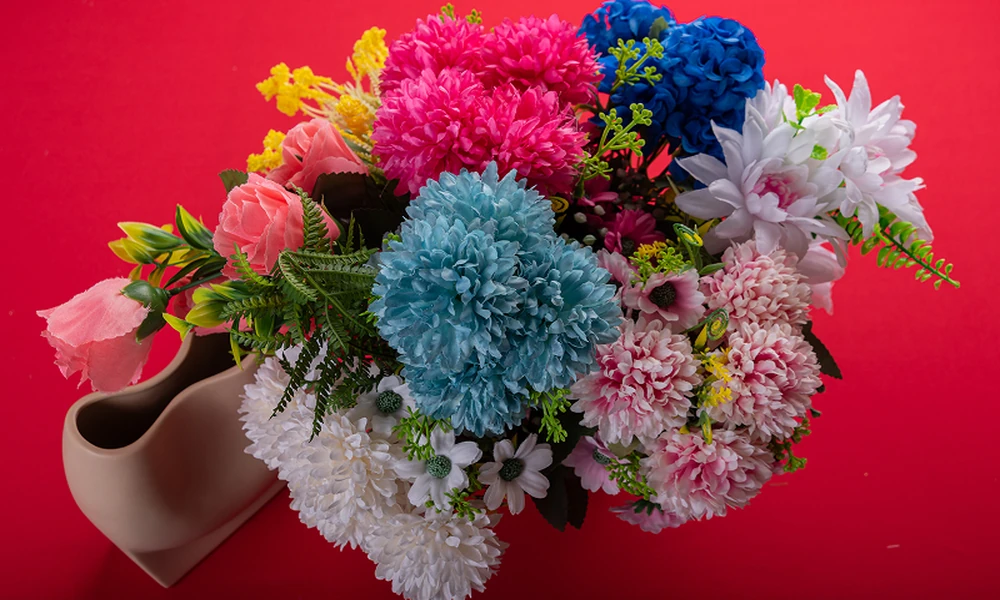
Carnations (Dianthus caryophyllus) have a long history as cultivated flowers and are widely used in bouquets, floral arrangements and ceremonial displays. Different carnation colours have acquired particular meanings through traditions such as floriography, or the symbolic language of flowers.
These meanings can provide context when choosing a carnation bouquet in Singapore or elsewhere. However, flower symbolism can vary between cultures, historical periods and personal interpretations, so colour meanings should be viewed as traditions rather than fixed rules.
What Do Carnations Symbolise in General?
Carnations are commonly associated with love, affection, admiration and distinction. The specific message traditionally attached to the flower often changes according to its colour.
Carnations also have cultural and historical associations. For example, they have been connected with Mother’s Day traditions in the United States since the early 20th century, particularly through the work of Anna Jarvis.
Common symbolic associations include:
- Love and affection
- Admiration
- Gratitude
- Remembrance
- Distinction
That said, when selecting carnations from a florist, considering the colour alongside the occasion can help provide context for the arrangement. Red carnations, for example, traditionally communicate a different message from white or yellow ones.
What Do Red Carnations Symbolise?
Red carnations are traditionally associated with love and admiration. Historical flower-language sources have sometimes distinguished between shades of red, giving lighter and darker flowers slightly different meanings.
Common interpretations include:
- Light red carnations: Traditionally associated with admiration.
- Dark red carnations: Commonly linked with deeper love and affection.
- Red carnations generally: Often connected with affection and romantic sentiment.
These associations make red carnations relevant to occasions centred on affection or admiration. Overall, the symbolism becomes stronger and more romantic as the traditional interpretation moves towards deeper shades of red.
What Do Pink Carnations Symbolise?
Pink carnations are commonly associated with gratitude, affection and maternal love. Their connection with mothers is particularly significant in the history of Mother’s Day.
Anna Jarvis, who campaigned for the establishment of Mother’s Day in the United States, used carnations in connection with the occasion. Her mother’s favourite flower was reportedly the white carnation, while pink and other coloured carnations later became associated with honouring living mothers.
Today, pink carnations may therefore communicate:
- Gratitude
- Affection
- Appreciation
- Maternal love
These meanings make pink carnations distinct from the more romantic symbolism traditionally associated with red carnations.
What Do White Carnations Symbolise?
White carnations have traditionally been associated with purity, innocence, remembrance and love. They also have an important historical connection with Mother’s Day.
Anna Jarvis distributed white carnations during an early Mother’s Day observance in 1908. The flower subsequently became strongly connected with the occasion, although customs surrounding different carnation colours developed over time.
White carnations can therefore carry several meanings depending on context. Additionally, in a carnation bouquet, their neutral appearance may also allow them to be combined visually with flowers of other colours, although the symbolic interpretation depends on the occasion and recipient.
Overall, white carnations are particularly associated with remembrance and sincere affection.
What Do Yellow Carnations Symbolise?
Yellow carnations have a more complicated traditional meaning. In Victorian-era flower language, they were associated with disappointment, rejection or disdain.
Traditional interpretations may include:
- Disappointment
- Rejection
- Refusal
- Disdain
These historical meanings should not automatically be applied to every modern bouquet. Yellow flowers more broadly can be associated with cheerful visual qualities in contemporary floral use, and recipients may not recognise older floriographic meanings.
Due to this reason, context matters when a florist in Singapore uses yellow carnations in an arrangement. Their traditional symbolism is relatively negative, but flower meanings are neither universal nor fixed.
What Do Purple Carnations Symbolise?
Purple carnations were traditionally associated with capriciousness or changeability in the language of flowers. In this context, capriciousness refers to behaviour or feelings that change suddenly or unpredictably.
Modern recipients may not be familiar with this historical meaning. Purple is also used as an aesthetic colour in contemporary floral arrangements without necessarily communicating the traditional message.
Purple carnations therefore demonstrate how historical flower symbolism and modern floral use can differ. The intended meaning is best understood from the context in which the flowers are given.
What Do Striped Carnations Symbolise?
Striped carnations traditionally carried a meaning of refusal or regret that affection could not be returned. In historical flower language, they could communicate that a person could not accept another person’s romantic feelings.
This symbolism is considerably more specific than that of many solid-coloured carnations. However, it should not be assumed that a modern recipient will recognise the traditional meaning.
Striped carnations illustrate an important principle of flower symbolism: historical meanings provide cultural context, but they do not create universal messages. Personal intention, cultural background and the occasion can all affect how flowers are interpreted.
A carnation can say more than its petals reveal. Contact D’Spring to choose a carnation bouquet with colours that reflect the sentiment you want to share.
